
Des Moines Directory Collections
Des Moines city directory research begins with several collections, not one complete shelf. The Washington State Library reports broad statewide city-directory holdings from 1890 to the present across about 35 counties and 300 cities, but its public material does not identify a complete Des Moines run. Telephone-directory ranges begin in 1901 and also vary by place. KCLS adds historical maps and newspaper databases, while the Des Moines Historical Society supplies the strongest local collection. Ask each keeper for the exact title, city scope, publisher, and edition year before treating a volume as local evidence.
| Collection | Years | Where Held | Access |
|---|---|---|---|
| Washington city directories | 1890-present statewide, with local gaps | Washington State Library | Confirm current appointment access and exact Des Moines holdings |
| Washington telephone directories | Ranges from 1901-present | Washington State Library | Collection or microfilm access; request city and year |
| Sanborn maps | Washington places, 1867-1970 | KCLS History & Genealogy | Library-card or in-library database access |
| Local newspapers and images | Newspapers from 1946; images from the 1870s | Des Moines Historical Society | Contact the society for an appointment and finding help |
| Census and territorial records | Census 1850-1880 and 1900-1940; territorial sources vary | Washington State Library | Search by county, precinct, locality, and year |
The gaps matter. Statewide coverage does not prove that Des Moines appears in every year, and no official source reviewed identifies a full local publisher list or reverse-directory run. A catalog result is a lead until the title page and geographic scope are checked. Keep a citation for the volume, page, scan or reel, and access date. That small record makes later comparisons far more reliable.
Des Moines Library Research Route
The KCLS History & Genealogy collection is the practical first stop. It provides FamilySearch guidance, Sanborn Maps for Washington towns, and Washington Digital Newspapers. The Des Moines branch can help with database access, scans, and referrals. Sanborn sheets show footprints, building use, and block context. They do not name every resident, so pair a map with a dated directory, newspaper notice, census entry, or deed.
See the KCLS research-resource screen before choosing a database.
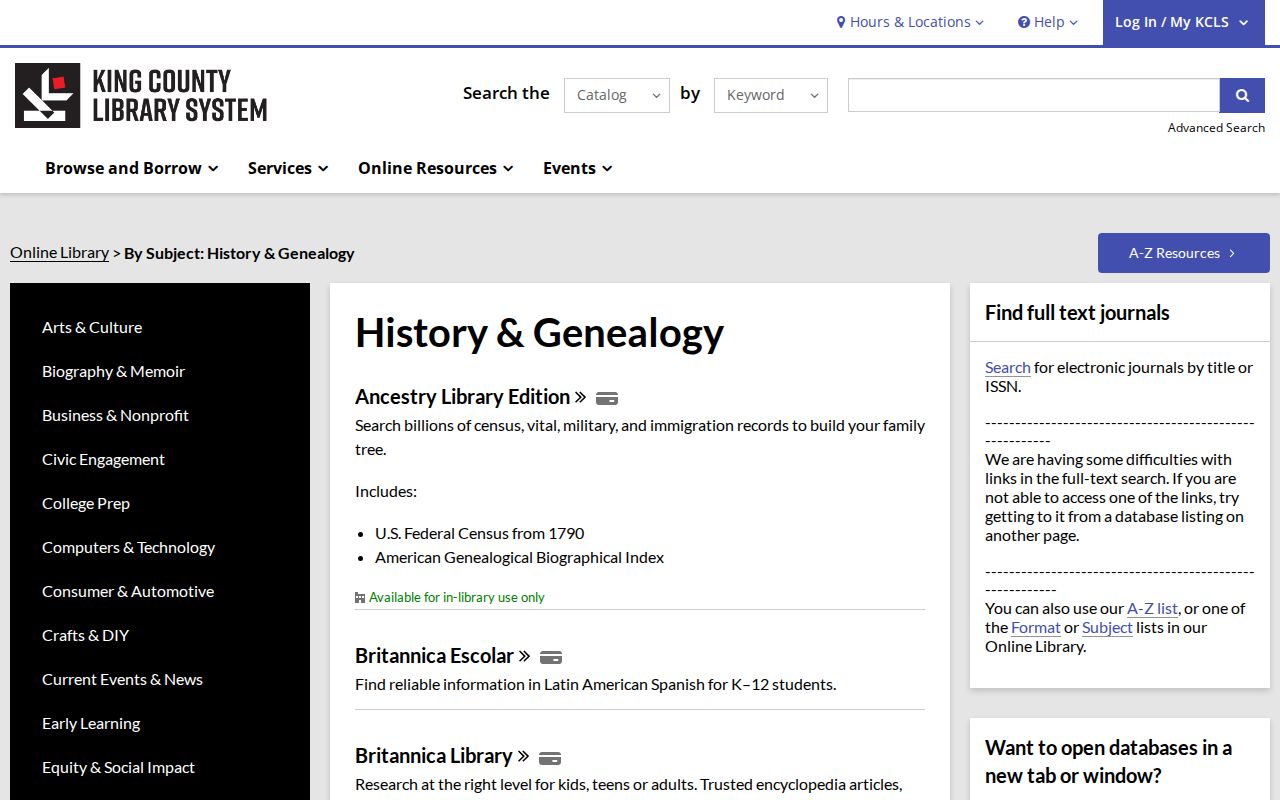
The resource page shows why KCLS can serve as the first access desk even when the original volume or map belongs to another keeper.
The Washington State Library remains important for statewide city directories, telephone books, census material, newspapers, vital indexes, probate sources, and territorial assessments. Public access changed after the building closed on July 1, 2025 following a funding loss. The notice described limited Thursday afternoon access by appointment. Verify the current arrangement before travel, and ask KCLS whether it can supply a database or interlibrary alternative.
Note: A statewide start year describes collection scope, not an unbroken Des Moines city directory run.
Des Moines Newspapers Since 1946
The Des Moines Historical Society collection puts local names into community context. Its holdings include newspapers beginning in 1946, homestead material from the 1870s, thousands of photographs and artifacts, monographs, glass negatives, tintypes, maritime exhibits, and an early telephone switchboard. These sources can supply a move notice, family event, business mention, house image, or neighborhood name missing from a city directory.
View the Historical Society collection page and contact route before planning a visit.
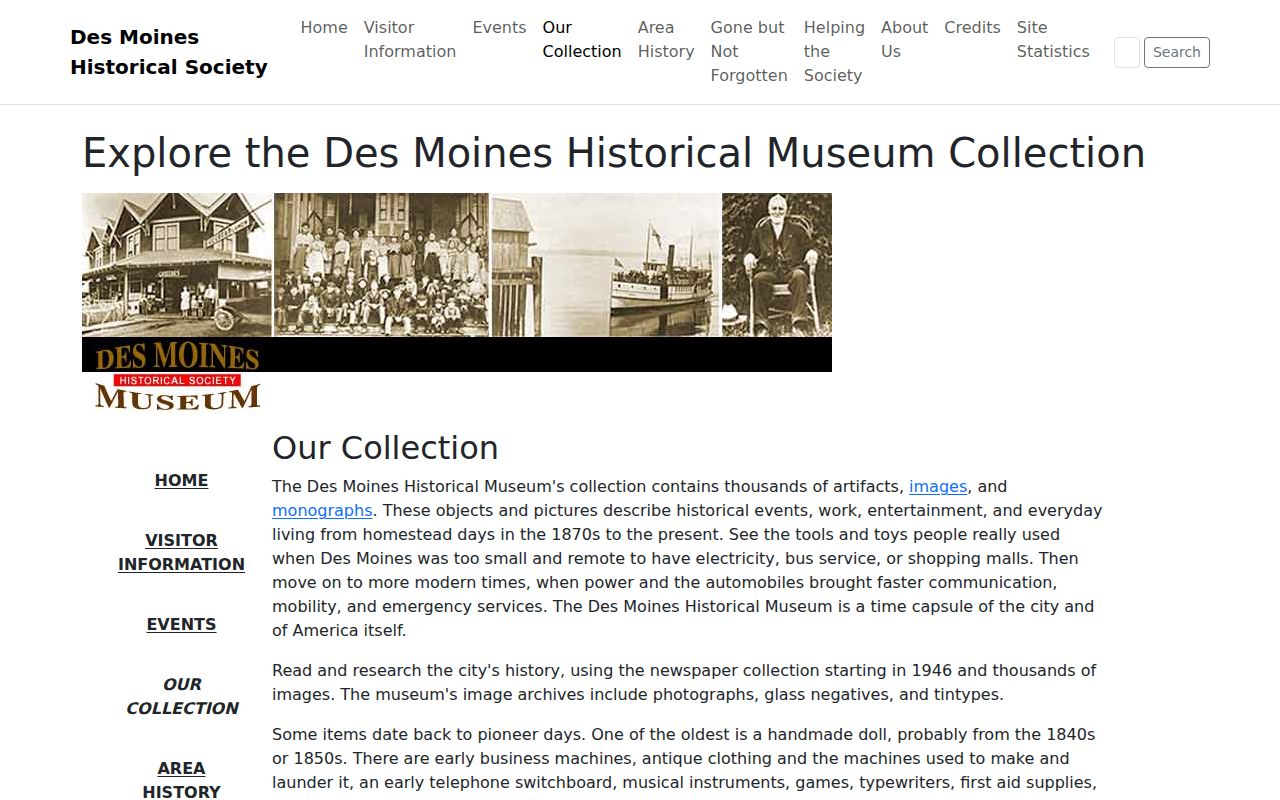
The captured page shows the breadth of the local holdings, but it does not promise a public full-name index. Ask whether an item is arranged by street, family, neighborhood, subject, or date. The society is at 730 S 225th Street and lists 206-824-5226 for contact.
Reading Des Moines Directory Entries
A directory entry is a dated statement from one publication. Copy what is printed before interpreting it. The Library of Congress describes common city-directory fields such as a name, spouse, street address, telephone number, business listing, and work line. Local editions may omit some fields or use short codes. Because no official Des Moines sample entry was found in the inspected sources, the inventory below is a checklist, not a fabricated example.
| Printed identity | Name, middle initial, suffix, spouse or household notation when present |
|---|---|
| Address line | Street number, street name, unit, and any residence or boarding abbreviation |
| Work line | Occupation or business name as historical metadata in that edition |
| Phone and cross-reference | Telephone number, street section, business section, or reverse-entry pointer |
| Source details | Title, publisher, edition year, page, volume, collection ID, and scan image |
- Criss-cross directory
- A reverse section arranged by street and house number instead of surname.
- Householder index
- A list centered on the person associated with a household, which may omit other people there.
- Abbreviation key
- The publisher’s legend for short codes. Save it because the same letter can mean different things in different volumes.
Read neighboring lines as well as the target. They can reveal a street run, a duplicate surname, or an address-number shift. Do not turn a spouse notation or household heading into a claim that every family member lived there for the full publication year.
Four Des Moines Directory Forms
The words city directory can describe several tools. An alphabetical volume begins with a surname. A street or criss-cross section begins with an address. A telephone directory joins a listed name or business to a phone number. A business directory covers public enterprises rather than a full population. Ask for the form that matches the search question.
- Use an alphabetical city directory when a surname is known.
- Use a reverse section when the old street address is known.
- Use telephone books to test a listed household, exchange, or business.
- Use Sanborn maps to see whether the structure existed in that map year.
A phone book is not a census, and a business entry is not proof of a private home. Record the role each source supports. For modern address-keyed research, the Des Moines street directory workflow explains the parcel and deed route without duplicating the historical shelf.
Des Moines Names Beyond City Limits
Historical searches often fail because the place term changed. The society’s collection context names Redondo, Woodmont, Zenith, Midway, North Hill, Maywood, Normandy Park, Manhattan, and Angle Lake. Search those labels alongside Des Moines and King County. They are useful search terms, not proof that each place sat inside the incorporated city at a given date.
Des Moines incorporated on June 17, 1959. A small area north of S 216th Street and 13th Avenue South was annexed later that year. Older census, tax, deed, and directory material may therefore use a county precinct, plat, nearby locality, or postal name. The legal description and plat can be more stable than the name printed on a directory cover.
Digital Cross-Checks for Des Moines
Washington Digital Archives provides a free historical search with Record Series, County, and Title controls. King County marriage material is described across 1855 to 2017, with certificate images for 1855 to 1990 and other series-specific limits. A marriage hit can connect names and an event date, but it cannot prove residence throughout that year.
Open the Digital Archives search form to inspect the live collection choices.
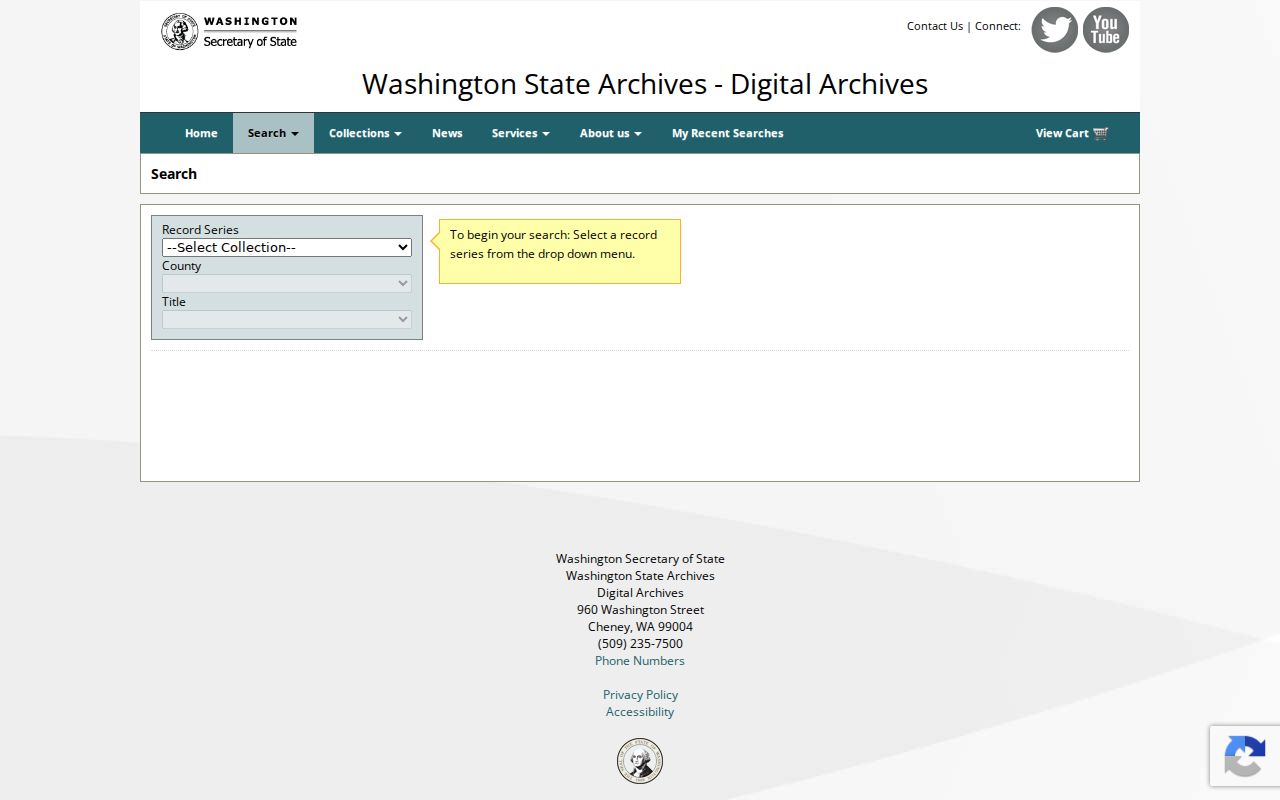
The form is most useful after the directory supplies a name spelling and approximate year. Choose King County where the series permits it, record the collection title, and review the item page for exact coverage. Combine a marriage or census result with a street listing only when the dates and identities align.
Des Moines Records Through Time
Local history changes how a city-directory line should be read. Settlement accounts begin around 1867, the town plat was recorded in 1889, and shoreline travel shaped early activity. The historical society’s newspaper run begins much later. The timeline below marks source changes, not a promise that directories exist for each year.
| Year | Research milestone |
|---|---|
| 1889 | Des Moines town plat recorded |
| 1890 | State Library’s broad city-directory range begins |
| 1946 | DMHS local newspaper holdings begin |
| 1959 | Des Moines incorporates and records a small annexation |
| 1991 | Recorder online-image era generally begins August 1 |
| 2025 | State Library public access changes July 1 |
For earlier deeds, King County Archives supplies the microfilm route. For pre-1946 news, use statewide newspaper holdings rather than implying the local society reaches back to the nineteenth century.
Trace Families in Des Moines Directories
Family history becomes stronger when each Des Moines city directory entry is paired with a second source. Start with the person or address, then move one edition at a time. Keep the exact spelling and label the relationship shown by each record. A directory says “listed,” a deed says “recorded party,” and a census describes a household on its enumeration date.
- Normalize the modern address with the county parcel map and city map. Save the parcel number, legal description, and nearby cross streets.
- Ask the State Library, KCLS, and DMHS for the exact city, telephone, or reverse volume and year. Photograph the title and abbreviation pages.
- Search the known surname, then inspect the street section and several nearby entries. Note every change of number, spelling, and household code.
- Pair listings with federal census schedules available for 1850-1880 and 1900-1940, plus territorial census material where relevant.
- Bridge missing years with deeds, newspapers, marriage records, tax sources, and Sanborn maps. State what each record proves.
A person’s disappearance from the next edition does not explain why. The person may have moved, died, changed names, become unlisted, or fallen outside that publisher’s geographic scope. Search newspapers, vital indexes, marriage records, and the next few editions before closing the trail. For a modern verification after a historical find, use the one-person resident lookup process.
Note: Preserve “not located in this volume” as the result when no entry appears; absence from one edition is not proof of absence from Des Moines.