
Des Moines Previous Residents by Record Era
The route backward changes at the county's online cutoff and again when the goal shifts from ownership to occupancy. Start with the present parcel, preserve its legal description, and choose the next source by date and by the fact it can actually show.
| Source | Years It Covers | Where Held | What It Shows |
|---|---|---|---|
| Landmark recordings | Generally Aug. 1, 1991 to present | King County Recorder online | Indexed instruments, party roles, dates, numbers, legal descriptions, and many images |
| Recorded-record microfilm | 1853 through July 31, 1991 | King County Archives | Earlier grantor, grantee, deed indexes, and images on lobby readers |
| Assessor record cards and rolls | Current and historical systems; depth varies | eReal and Regional Branch Archives | Parcel, use, value, name, legal description, and building change context |
| Sanborn maps | Washington places, 1867 to 1970 | KCLS and Washington State Library | Structure footprint, material, use, address, and block context |
| Directories and newspapers | Statewide directory claim from 1890; DMHS newspapers from 1946 | State Library, KCLS, and DMHS | Dated names, addresses, telephone, notices, moves, and community events |
Landmark is the practical first stop for a recent deed. Earlier recorded transfers require the Archives microfilm route. For past residents who did not own the parcel, move to dated directories, census sources, newspapers, and images rather than forcing a deed to answer an occupancy question.
Start a Des Moines House History With Parcel ID
King County Landmark has no street-address field. Parcel Viewer bridges that gap: find the modern site, copy the parcel number, legal description, situs, and map position, then carry the parcel or owner name into the recorder index. This keeps a changed street label from breaking the chain.
The assessor separates situs address, owner/name information, and tax mailing data. A mailing address may sit outside Des Moines, and a recorded owner may not be an occupant. Label each field and date before adding it to a previous residents timeline.
Note: Legal description, plat block and lot, and parcel number are sturdier historical keys than a street number alone.
Trace Previous Residents Through King County Deeds
The ownership chain starts with the current parcel, then walks backward one recorded conveyance at a time. Party role and legal-description continuity matter more than a same-name hit.
- Find the modern parcel and copy its number, situs, legal description, and map location.
- Search Landmark by the current or recent owner's name and parcel ID, then open the latest deed.
- Record the grantor, grantee, instrument type, recording number and date, legal description, and prior reference.
- Follow the prior instrument and search both sides of each transfer, checking description continuity.
- At the pre-August 1991 boundary, continue through King County Archives microfilm.
- Grantor and grantee
- The parties transferring and receiving an interest in a recorded instrument.
- Chain of title
- The linked sequence of recorded transfers for the same land.
- Legal description
- The land's formal plat, lot, block, or metes-and-bounds identity, which can survive an address change.
The 1991 Cutoff in a Des Moines Resident Trail
Landmark's online coverage generally begins August 1, 1991. King County Archives holds recorded-record microfilm from 1853 through July 31, 1991, with self-service lobby readers. The cutoff is a change of access channel, not the end of a parcel's history.
The Archives visit page is the proper place to confirm current access before travel. Keep instrument references gathered online because they can guide the earlier index search. Search deeds of trust and reconveyances separately from conveyances: a financing event may explain a record without changing ownership.
The King County Archives access page documents the visit route. The captured page below is useful for planning that handoff.
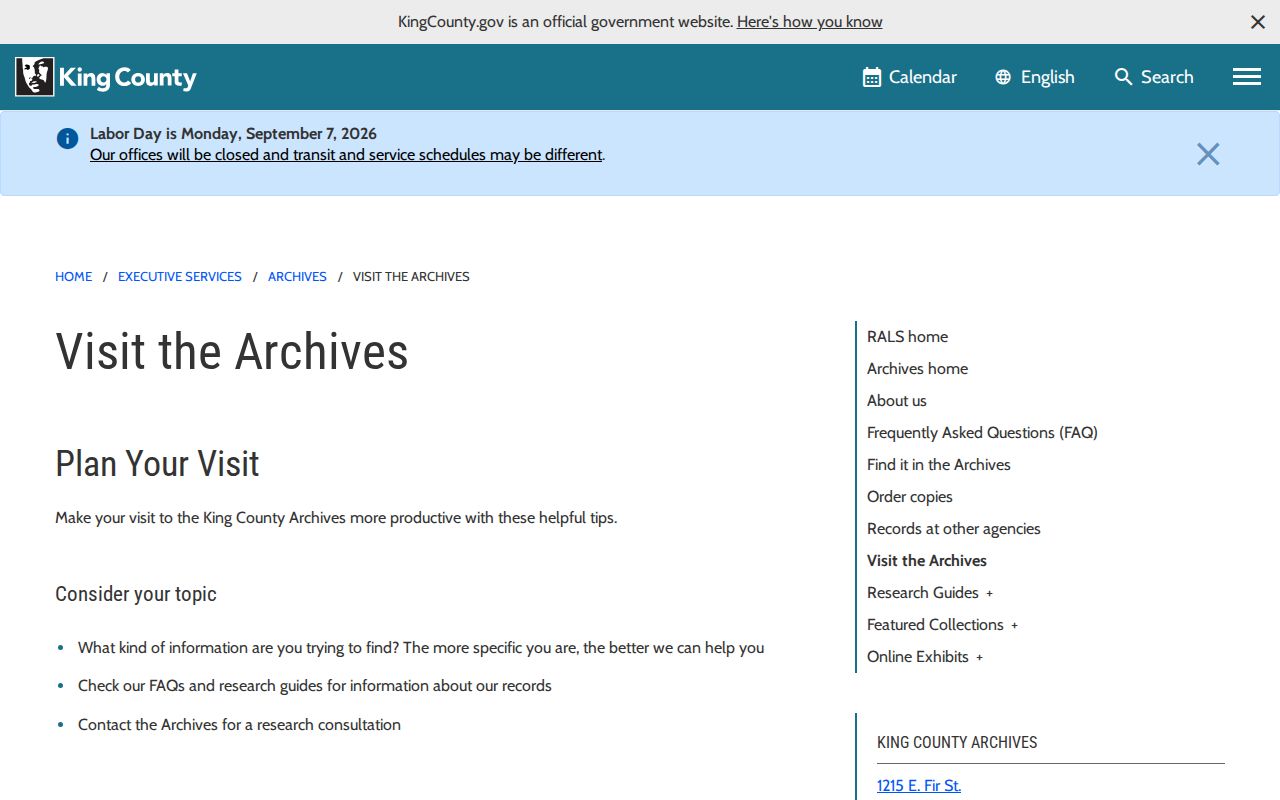
That visit step preserves the chain when the web index no longer reaches the needed recording year.
Sanborn Maps Date a Des Moines Structure
KCLS and the Washington State Library provide access to Sanborn fire-insurance maps covering Washington cities and towns from 1867 to 1970. A sheet can show whether a residence, storefront, dock, or other structure existed in one year and whether its footprint, material, or use changed.
A map dates the built place, not the household. Pair its block and address clues with a deed, assessor card, directory, newspaper, or census record. Shoreline sites may also appear through plat and maritime context rather than a simple modern street label.
Des Moines Newspapers Put People in Time
The Des Moines Historical Society describes newspapers beginning in 1946, plus photographs, glass negatives, tintypes, and maritime holdings. These sources can add notices of moves, deaths, businesses, civic events, or neighborhood life to an address history.
The public collection page does not promise a complete online name or street index. Ask whether material is arranged by owner, street, neighborhood, or subject. A dated photograph may identify a place while leaving the title holder or occupant unresolved.
Des Moines Past Households Between Deeds
Ownership records are only half the backward trail. A directory can place a listed person at an address in one publication year, while census schedules and newspapers can test household relationships and dates. The exact local reverse-directory run was not confirmed, so begin with KCLS, the State Library, and DMHS and ask for the year and format needed. The collection types are covered in more depth on the Des Moines city directory page.
- Choose a deed or assessor-card date and identify the street number printed then.
- Check the closest directory edition by both surname and address or criss-cross arrangement.
- Compare the nearest public census year, allowing for spelling and boundary shifts.
- Search DMHS and state newspaper collections for the same name, address, and neighborhood terms.
- Log each result as “listed at” with its source date rather than claiming continuous residence.
An obituary, marriage record, probate file, or newspaper notice may explain when a household arrived, left, or changed. Each has its own access rules and proves an event or publication statement, not uninterrupted occupancy.
Lawful use. Research Des Moines previous residents for house history, family history, or personal curiosity, never to track, harass, or intimidate a living person.
What Previous Resident Records Do Not Prove
A deed establishes a recorded transaction, not daily residence. An assessor card shows account and property context, not that the owner lived at the parcel. A directory records what one edition printed, and a tax mailing address can lead far from the situs.
Build an era table with record date, instrument, party role, legal-description match, address as printed, and source image. Mark conflicts instead of smoothing them into a story. If an old number fails, use the legal description, plat, Sanborn block, and nearby roads. No verified citywide renumbering date was found.
This distinction keeps previous residents separate from past owners and produces a Des Moines house history that can be checked. It also leaves room for genuine gaps caused by an unlisted household, an unavailable local directory run, a hidden recorder image, or a changed boundary.
Landmark search results should be logged as instruments, not biographies. For each hit, retain the recording date and number, document type, grantor and grantee roles, parcel ID if present, legal description, and any referenced earlier instrument. A deed of trust, lien, or reconveyance may place a name in the chain without transferring title. Following only names can jump to an unrelated parcel, especially with a common surname in King County.
The Assessor's property detail can help test continuity through parcel, situs, jurisdiction, levy code, property type, plat block and lot, legal description, land dimensions, values, and building characteristics. A sample county detail shows how those groups are arranged, but its Seattle address is only a layout example and not Des Moines evidence. For the target house, save the actual result and its lookup date, then compare its legal land fields with every deed.
Permits and code files can add a physical chapter. Des Moines routes permits through MyBuildingPermit and holds city records that may be requested with useful details such as address, date range, permit number, case number, or subject. An application, inspection, comment, or plan can show work at the site. The applicant is not automatically an owner or past resident, so keep the role as printed and request the underlying file when the index is too thin.
Directory research works best as a sequence rather than a one-time surname search. Look for the exact address in an edition close to a deed date, inspect adjacent entries and abbreviation keys, then move forward and backward one available year at a time. Alphabetical lists, telephone books, street indexes, and reverse or criss-cross volumes organize evidence differently. Record an exact page citation and edition date for each name.
Census schedules are a periodic household snapshot, not an annual bridge. Use directories and newspapers between census years, then compare names, ages, relationships, and address or enumeration geography when the census becomes available. A household can move between publications, and spelling can shift. The proper wording is that a person was “listed at” the address on a source date, unless several independent sources justify a stronger conclusion.
DMHS local history adds context that a title chain cannot. Its collection includes maritime material, an early telephone switchboard, photographs, and newspapers. Shoreline travel, ferries, parks, and marina growth shaped the city before and after incorporation. A Redondo or Woodmont clue may lead to an image, business notice, or transportation story even when a modern address search fails. That context belongs beside, not in place of, the legal record.
Washington State Library access changed after July 1, 2025. Official collection pages describe closure to general public access and limited Thursday appointment availability. Check current conditions before planning a visit, and use KCLS or King County Archives as practical alternatives where their holdings fit. The State Library's broad claim of city directories from 1890 to the present across hundreds of Washington places does not verify a continuous Des Moines run.
A recorder image may also be unavailable even though an indexed instrument exists. King County has a Web Image Access Removal process for sensitive content, and protected records can require another copy channel. Treat a missing scan as an access signal. Retain the index citation, ask the Recorder or Archives about lawful copy access, and never rewrite the gap as evidence that the transfer did not occur.